Ingredient Logic
What we never use.
Every formula we sell excludes the ingredients below — no exceptions, no fine print. This page is the full list, with the reason for each, because a never-list without reasons is just marketing.
Why the list is longer than the law requires
Where a cosmetic is sold determines what it is allowed to contain — and the gap between the two biggest markets is enormous.
1,600+
Substances banned or restricted in EU cosmetics
The EU Cosmetics Regulation prohibits or tightly restricts well over 1,600 substances, and requires safety assessment before a product reaches a shelf.
~11
Substances banned in US cosmetics
The FDA has banned or restricted roughly a dozen ingredients in cosmetics. In the US, most ingredients reach the market without pre-approval.
We formulate to the stricter standard by default. If the EU will not allow it, or is actively questioning it, it does not go in — whether or not US law asks us to care.
The full never-list
- Talc
Cosmetic talc shares geology with asbestos, and supply-chain testing standards vary by supplier. We use mineral and botanical bulking agents instead.
Regulatory contextRestricted in the EU; under ongoing safety review.
- Lake dyes (FD&C and D&C colorants)
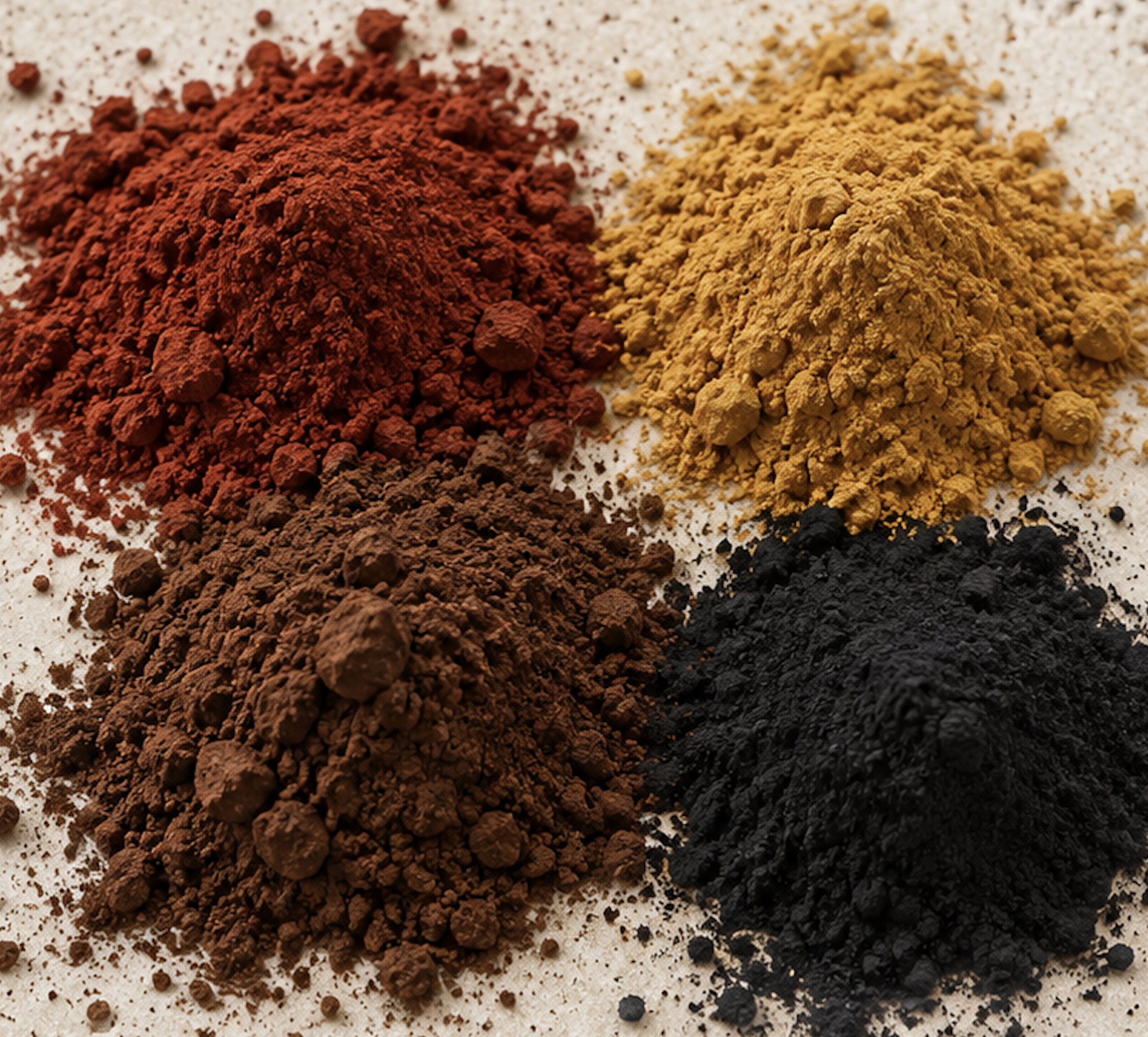
Lake dyes are synthetic colorants bound to a mineral substrate. They are petroleum-derived, can contain trace contaminants, and the color they provide is one iron oxides and ultramarines already do well. Every shade we sell is colored with named mineral pigments.
Regulatory contextMany individual lake dyes are banned or restricted in EU cosmetics; nearly all remain permitted in the US.
- Nanoparticles
Our minerals and pigments are non-nano and uncoated, so particle size is stated rather than assumed.
Regulatory contextPermitted in the EU only with labeling and safety review; we opt out entirely.
- Animal-tested ingredients
No ingredient in any ingredientlogic formula is tested on animals, and we do not sell where animal testing is required by law. Cruelty-free is a baseline, not a badge.
Regulatory contextAnimal testing for cosmetics has been banned in the EU since 2013. It is still legal in the US.
- Carmine
Carmine is a red pigment made from cochineal insects. It is a common reaction trigger and it is not vegan, so iron oxides do the red work in every shade we sell.
Regulatory contextPermitted in both markets; we exclude it on principle.
- Parabens
We preserve with named botanicals — oregano, thyme, olive leaf, rosemary, lavender, goldenseal — so we can list the whole preservation system by name.
Regulatory contextSeveral parabens are banned in the EU; most remain permitted in the US.
- Synthetic fragrance
US labeling rules let a whole undisclosed mixture hide behind the single word 'fragrance'. Any scent in our products comes from an ingredient we name in the list.
Regulatory contextThe EU requires disclosure of 26 known fragrance allergens; the US requires none.
- Bismuth oxychloride
A common pressed-powder filler associated with itching for some wearers. Our pressed line is built on mica and jojoba instead.
Regulatory contextPermitted in both markets; excluded here for comfort.
- Gluten
No gluten-containing ingredient is used in any formula.
Regulatory contextNot a regulatory issue in either market; excluded for the customers who ask.
How this differs from Our Standards
Our Standards covers everything that is true of how we formulate — the claims we make, the claims we refuse to make, and the ingredients that appear in some formulas and not others. This page is narrower and simpler: the ingredients that appear in nothing we make, ever.