Ingredient Logic
Our Standards
Ingredient Logic is our rule that every ingredient must have a stated job — and every job must be worth stating.
Always true, of everything we make
These are the only badges we allow sitewide. Anything narrower — mica-free, titanium dioxide-free — belongs to a specific product and appears only on that product's page.
The never-list
Not a marketing list. Each of these has a reason, and the reason is the point.
- Talc
- Cosmetic talc shares geology with asbestos, and supply-chain testing standards vary by supplier. We use mineral and botanical bulking agents instead.
- Carmine
- Carmine is a red pigment made from cochineal insects. It is a common reaction trigger and it is not vegan, so iron oxides do the red work in every shade we sell.
- Parabens
- We preserve with named botanicals — oregano, thyme, olive leaf, rosemary, lavender, goldenseal — so we can list the whole preservation system by name.
- Synthetic fragrance
- US labeling rules let a whole undisclosed mixture hide behind the single word 'fragrance'. Any scent in our products comes from an ingredient we name in the list.
- Nanoparticles
- Our minerals and pigments are non-nano and uncoated, so particle size is stated rather than assumed.
- Gluten
- No gluten-containing ingredient is used in any formula.
- Bismuth oxychloride
- A common pressed-powder filler associated with itching for some wearers. Our pressed line is built on mica and jojoba instead.
In some formulas, not others
Different skins keep different avoid-lists. Rather than tell you which list is correct, we formulate both ways and publish the table.
| Ingredient | Where we use it | Where we omit it | Why both are honest choices |
|---|---|---|---|
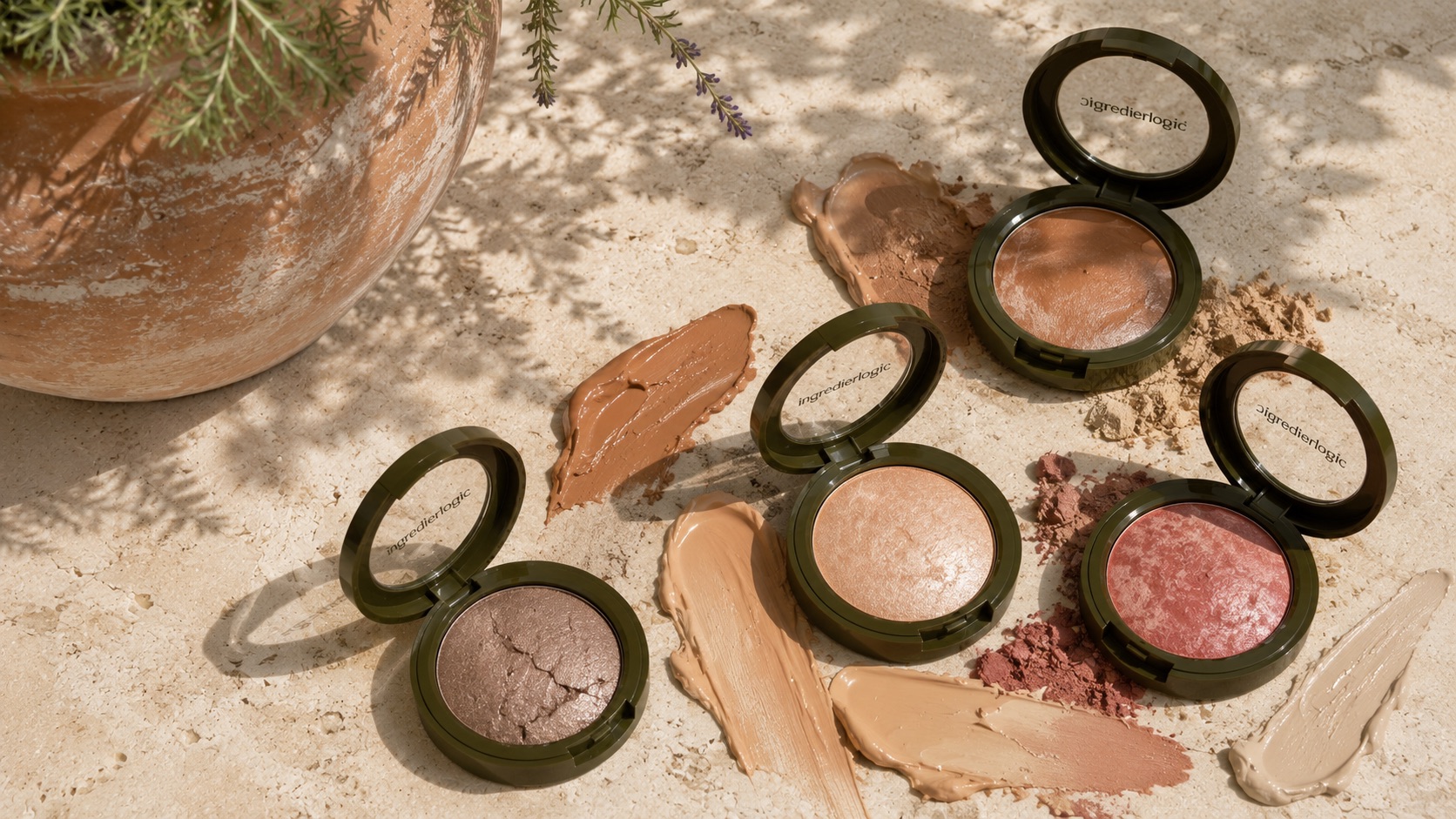
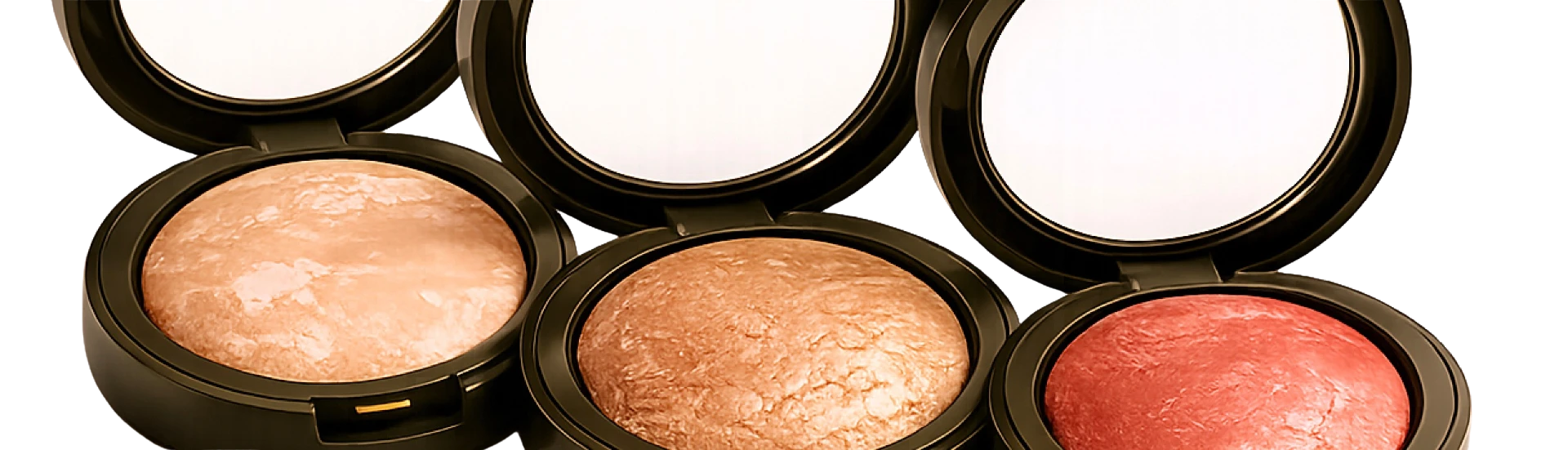
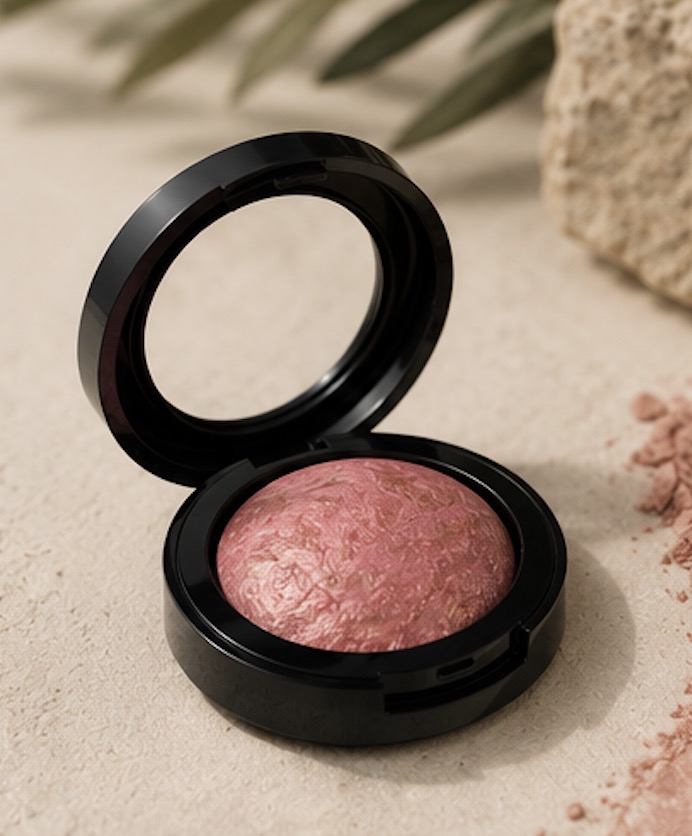
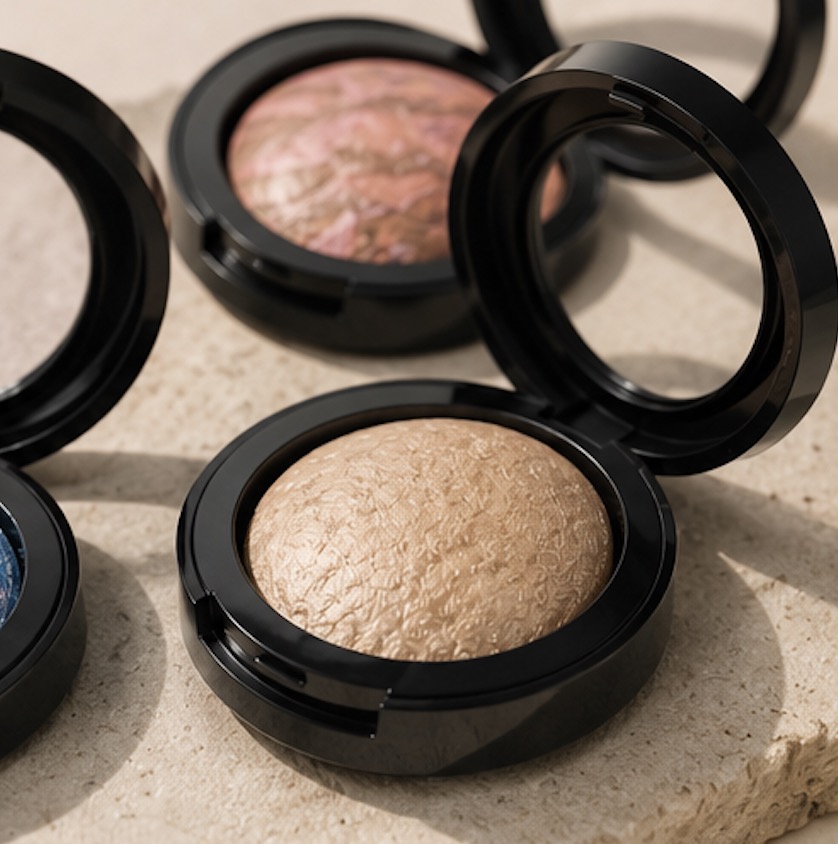
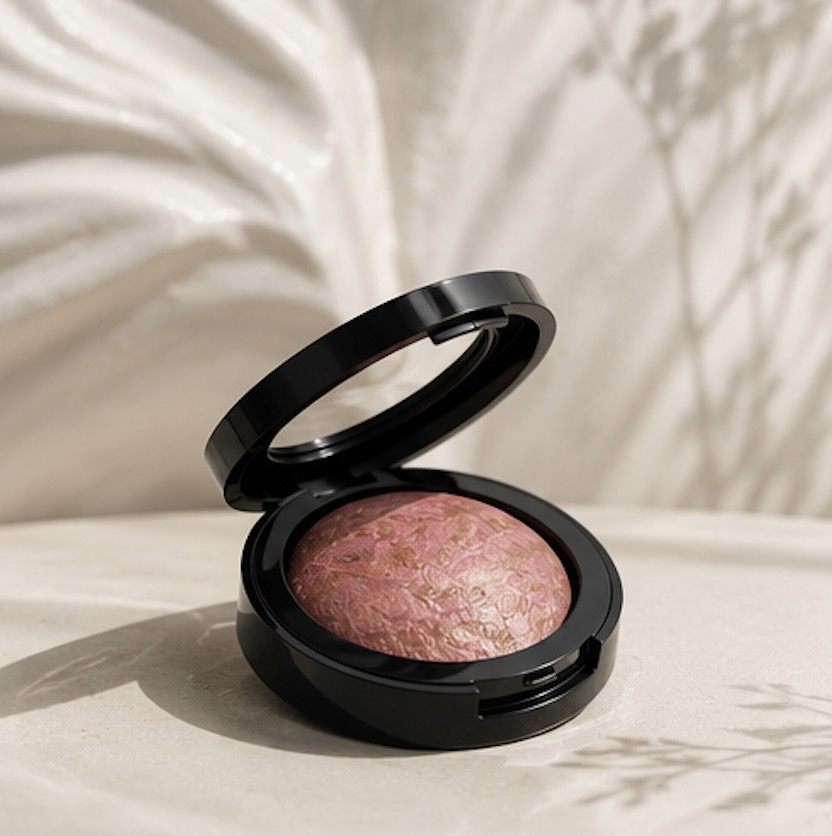
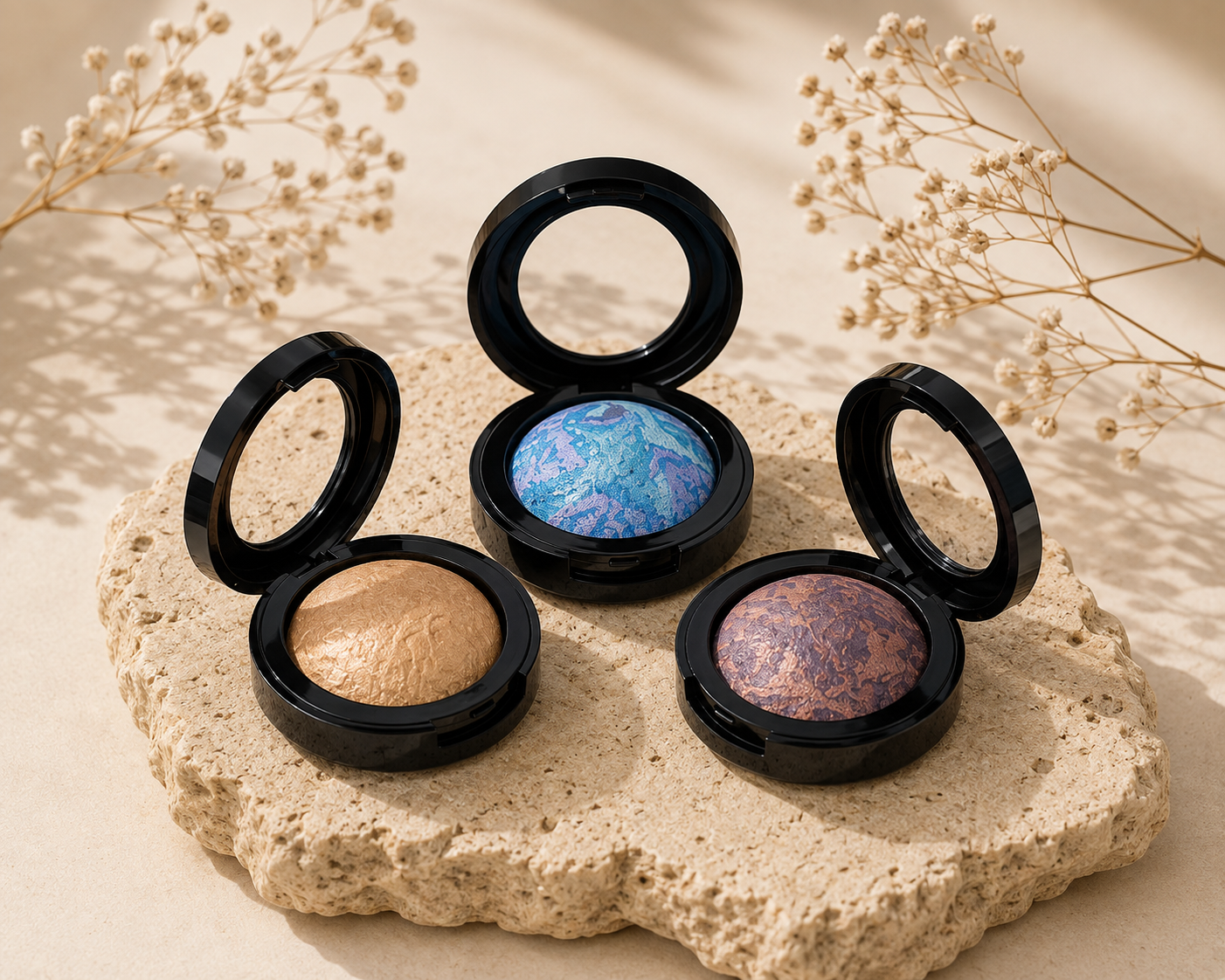
| Mica | Pressed foundation, blush, highlighter, trios | Liquid Foundation, Cream Foundation, mascara, primer | Mica is what makes a pressed powder sit flat and diffuse light. Some people avoid it on supply-chain grounds and some on skin-feel, so we built two full-coverage foundations, one with and one without. |
| Titanium Dioxide (non-nano) | Liquid Foundation, Cream Foundation | Pressed foundation, blush, highlighter, trios, mascara, primer | It is the white base pigment that lets a mica-free formula reach full coverage. We make no SPF claim for it. Where we can hit the shade without it, we leave it out. |
| Boron Nitride | Liquid Foundation | The whole baked pressed line | It gives a liquid its slip and soft-focus. The pressed line gets the same effect from the mica platelets, so the ingredient is unnecessary there. |
| Zinc Oxide | Not currently used in any formula in this catalog | Pressed foundation, blush, highlighter, trios — stated explicitly on those pages | Some wearers avoid zinc oxide, and it is a common assumed ingredient in mineral makeup. We state its absence rather than let it be assumed. |
| Ultramarine | Cream Foundation | Pressed foundation, blush, highlighter, trios | Cool lid shades and true-reading deep foundation shades need a blue-violet pigment. Warm shades do not, so it is not in the base. |
| Dimethicone | Blur + Set | Pressed foundation, blush, highlighter, trios, Liquid Foundation, Cream Foundation, primer | Used at safe concentrations for glide and press-down. Silicone-free alternatives exist elsewhere in our line, and we name which ones. |
| Phenoxyethanol | Blur + Set and the lengthening mascara, at 0.01–1% | Liquid Foundation and primer, which use botanical preservation | A water formula used near the eyes has to be preserved. We would rather name the preservative and its range than run an unnamed system. |
| Silica | Blur + Set, primer | The nine-ingredient pressed base | Silica blurs and controls shine. The base achieves enough of both with mica and jojoba, so it is only added where the job genuinely needs it. |
What we will not claim
- No SPF or sun protection. Our liquid foundation contains non-nano titanium dioxide. That is a coverage pigment here, and we make no sun protection claim of any kind.
- No treatment or medical language. Ingredients are described by the job they do in the formula and by what you may notice wearing it — never as a cure or a treatment.
- No "chemical-free". Everything is a chemical. The useful question is which ones, and whether they are named.
- No proprietary blends. If it is in the formula, it is in the list with its own line.
Before you wear anything new
Patch test on the inner forearm for 24 hours before first full-face wear. This holds for every product we sell, including the shortest formulas. Nothing on this site is medical advice.