Ingredient Detective
Ten ingredients. Guess what each one does in makeup.
10 questions · about 3 minutes
A makeup label is a list of jobs, not a vocabulary test. Meet ten ingredient names and guess what each does in a formula. After every answer, you get a plain-language explanation and a glossary link. Your score comes with two real products to explore, each with its ingredients named. No email is needed, and a wrong answer is simply another thing learned.
Makeup with nothing to hide.
What does Iron oxides do in makeup?
The answer: Colour pigments (main source of shade)
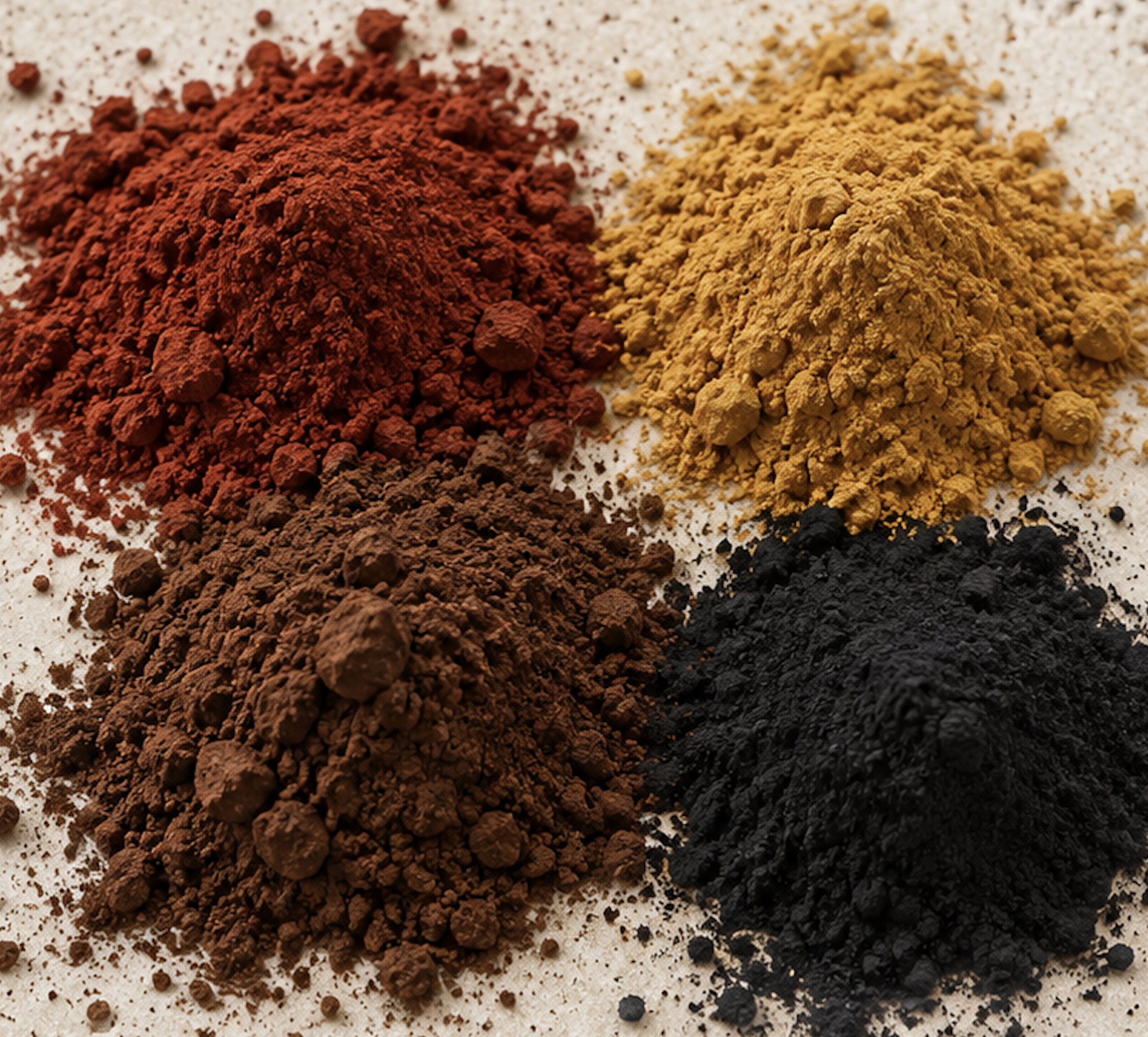
This is the color. Three oxides in different ratios make every shade we sell, which is why the shades read as skin rather than as paint, and why they do not oxidize orange over the day.
In our formulas: Long-Lasting Silky-Soft Pressed Mineral Foundation, Long-Lasting Silky-Soft Pressed Mineral Blush, Long-Lasting Pressed Mineral Highlighter, Long-Lasting Pressed Mineral Eyeshadow Trios, Baked Pressed Mineral Eyeshadow, Vegan Lengthening Mascara.
Read about Iron OxidesWhat does Mica do in makeup?
The answer: Adds shimmer and slip
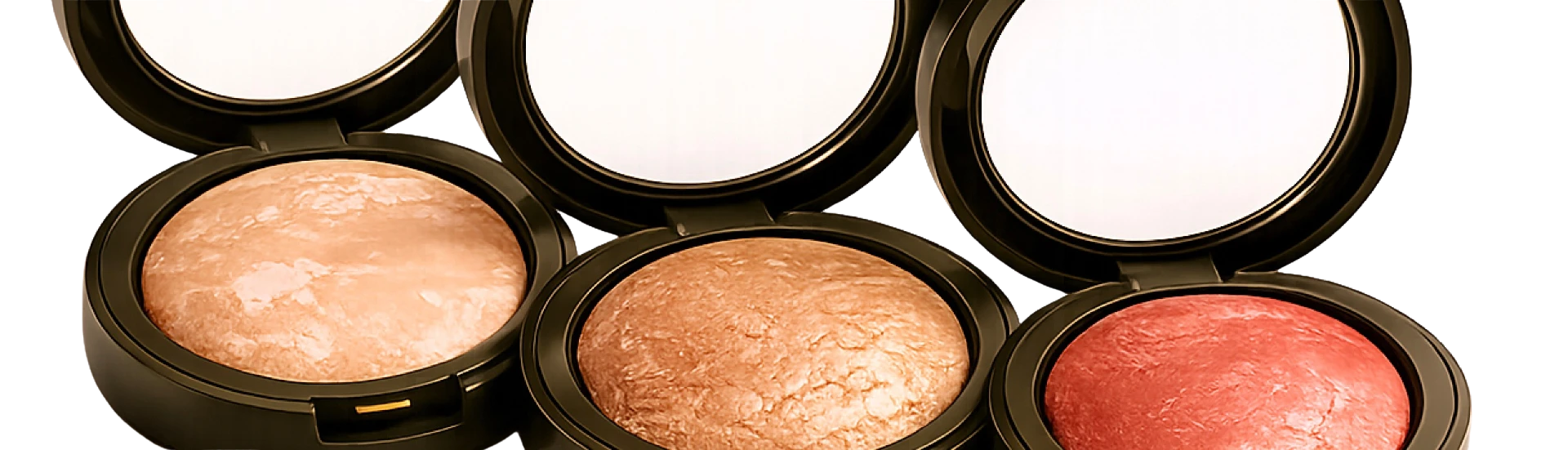
It is the body of the baked pressed formulas — the platelet structure is what lets a powder sit flat on skin, diffuse light instead of sitting on top of it, and carry pigment evenly across the face.
In our formulas: Long-Lasting Silky-Soft Pressed Mineral Foundation, Long-Lasting Silky-Soft Pressed Mineral Blush, Long-Lasting Pressed Mineral Highlighter, Long-Lasting Pressed Mineral Eyeshadow Trios, Baked Pressed Mineral Eyeshadow.
Read about MicaWhat does Titanium dioxide do in makeup?
The answer: A white pigment that adds opacity and coverage
It is the opacity in the Liquid Foundation. Full coverage from botanicals needs a white base pigment to build the iron oxides against, and non-nano titanium dioxide is the one that does it without mica.
Not in our currently listed formulas.
Read about Titanium DioxideWhat does Carmine do in makeup?
The answer: A red pigment made from cochineal insects
Carmine is a red pigment made from cochineal insects.
Always out of our formulas
Browse the ingredient glossaryWhat does Bismuth oxychloride do in makeup?
The answer: Gives a pearly finish and texture
Bismuth oxychloride gives makeup a pearly finish and texture.
Always out of our formulas
Browse the ingredient glossaryWhat does Talc do in makeup?
The answer: A soft filler that absorbs oil
Talc is a soft mineral filler that absorbs surface oil.
Always out of our formulas
Browse the ingredient glossaryWhat does Dimethicone do in makeup?
The answer: Adds glide
It is the glide in Blur + Set — what lets a translucent powder press down rather than sit on top.
In our formulas: Blur + Set Pressed Powder.
Read about DimethiconeWhat does Polymethylsilsesquioxane do in makeup?
The answer: Soft-focus spheres that scatter light
It is the soft-focus layer in Blur + Set. Round particles scatter light across fine lines instead of collecting in them, which is what makes a setting powder read as blur rather than as coverage.
In our formulas: Blur + Set Pressed Powder.
Read about Silicone Resin SpheresWhat does Phenoxyethanol do in makeup?
The answer: Keeps water-containing formulas from spoiling
It keeps a water-containing formula safe over its shelf life. In the mascara this matters most: bacterial growth in a product used near the eyes is a real risk, and we would rather name a preservative than accept that risk.
In our formulas: Blur + Set Pressed Powder, Vegan Lengthening Mascara.
Read about PhenoxyethanolWhat does Squalane do in makeup?
The answer: An emollient that helps texture spread
It is the emollient that makes full coverage wearable. Squalane spreads far for its weight, so pigment load can go up without the foundation reading heavy.
In our formulas: Blur + Set Pressed Powder.
Read about SqualaneWhat this quiz looks at
Ten ingredient functions, from colour pigments to emollients and preservatives. We describe what each does, not whether an ingredient is good or bad.
How to read your result
Your score reflects these ten questions only. Every Ingredient Logic product names each ingredient and the job it does.
A few questions
How do I read a makeup ingredient list?
Start with the ingredient names and look up the function of unfamiliar ones. Check the full list for your own non-negotiables. A single ingredient does not describe the whole formula.
What does “non-nano” mean?
Non-nano describes pigments that are not supplied as nanoparticles. Ingredient Logic uses non-nano pigments. It is not a promise of sun protection.
Are natural ingredients always better?
Not automatically. The full formula matters. Natural ingredients are not automatically safer, and synthetic ingredients are not automatically harmful.
Can I look up the answers?
Yes. The glossary is there to be read, not guarded. Every answer includes a glossary link or the glossary index.